Health and Safety Policy for Probate House Clearance London
Policy Overview and Purpose
 This Health and Safety Policy sets out the commitments and practical measures established by our probate house clearance operation to protect staff, contractors, clients and the public during estate clearances. The purpose is to clearly define responsibilities, safe working methods and the controls we use when conducting probate house clearances across urban residential and commercial properties. By outlining safety objectives and management arrangements we aim to reduce harm, prevent incidents and ensure that every clearance is carried out with dignity, care and caution.
The policy applies to all personnel involved in a clearance project including employees, sub-contractors and temporary workers engaged in probate house clearance work in London and surrounding areas. It recognises that each property and estate is different and requires a risk-based approach. All staff must familiarise themselves with the content and make safety a consistent part of daily operations. This document complements training, site-specific assessments and operational procedures while remaining focused on practical, non-legal guidance.
 Management commits to provide adequate resources, supervision and equipment so that removals and disposal tasks are undertaken safely. Senior personnel hold ultimate responsibility for implementation, but safety is a shared duty: supervisors ensure methods are followed, crew members report hazards and the business reviews performance regularly. Strong emphasis is placed on communication, pre-clearance briefings and using safe manual handling techniques to prevent injury.
Risk Assessment and Control Measures
Comprehensive risk assessments are carried out before any probate clearance starts. These assessments identify hazards such as unstable structures, sharp objects, pest infestations, mould, asbestos-containing materials, and chemical residues. Controls are selected to eliminate or reduce risks and include planning lifts, isolating hazards, and using mechanical aids. The assessments are recorded and updated where conditions change during a clearance.
 Key elements of our risk control process include: clear segregation of contaminated items; marking and securing fragile or hazardous material; and ensuring safe access and egress routes. When clearance involves attic, cellar or garden spaces, additional checks are undertaken for trip hazards, weak flooring and poor lighting. Pre-work walk-throughs are mandatory and form part of the job brief to all operatives.
Personal protective equipment (PPE) is provided and maintained to appropriate standards. Typical PPE for probate clearance tasks includes gloves, safety boots, eye protection, respiratory protection where dust or spores are present, and high-visibility clothing when working near roads. A concise PPE matrix helps staff choose the right protection for each activity.
Operations, Waste Handling and Special Items
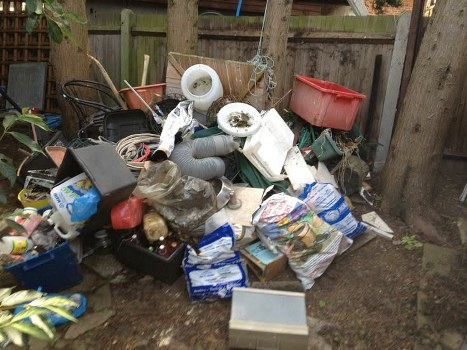
Operational controls are in place to manage the variety of materials encountered during a house clearance. When handling potentially hazardous items such as old chemicals, solvents, batteries or electrical appliances, staff follow designated segregation and containment procedures. Waste streams are separated into recyclable, hazardous and general refuse in accordance with best practice; contractors and operatives are trained on correct handling and packaging prior to disposal.
 Training and competence are essential. All operatives receive induction training covering manual handling, hazard recognition, safe use of tools and handling of hazardous or fragile items. Regular refresher sessions and toolbox talks ensure knowledge is kept current. New starters are supervised until competence is demonstrated; ongoing assessment is part of our performance framework.
 Emergency procedures and incident reporting are clearly set out. The policy details steps for dealing with injuries, fires, major spills and unexpected finds such as sharps or suspect substances. Incidents are recorded, investigated and used to improve procedures. Routine monitoring and audits verify compliance, and the policy is reviewed periodically to reflect operational learning and evolving best practice. This approach underpins safe probate clearance services and supports continual improvement.
Responsibilities, Monitoring and Review
Specific responsibilities are allocated to job roles: senior management provides resources and oversight; supervisors ensure tasks are planned and executed safely; operatives follow safe systems of work and report hazards. Contractors must conform to the same standards and provide evidence of competency. The organisation maintains records of training, risk assessments and inspections to demonstrate ongoing commitment to safety.
Monitoring uses a combination of site inspections, checklists, incident logs and worker feedback. Regular inspections identify trends and prompt corrective actions. Management reviews the policy and performance at scheduled intervals and after significant incidents. Review outcomes may result in revised procedures, additional training, or updated equipment to maintain high safety standards for probate clearance work.
In summary, this Health and Safety Policy establishes a clear, practical framework for safe probate house clearance operations. Through risk assessment, training, appropriate controls and a culture of shared responsibility, the aim is to protect people, property and the environment while delivering compassionate and professional estate clearance services.